
Unlocking the Mysteries of the Universe: The Amazing Use of AI in Astronomy and Physics
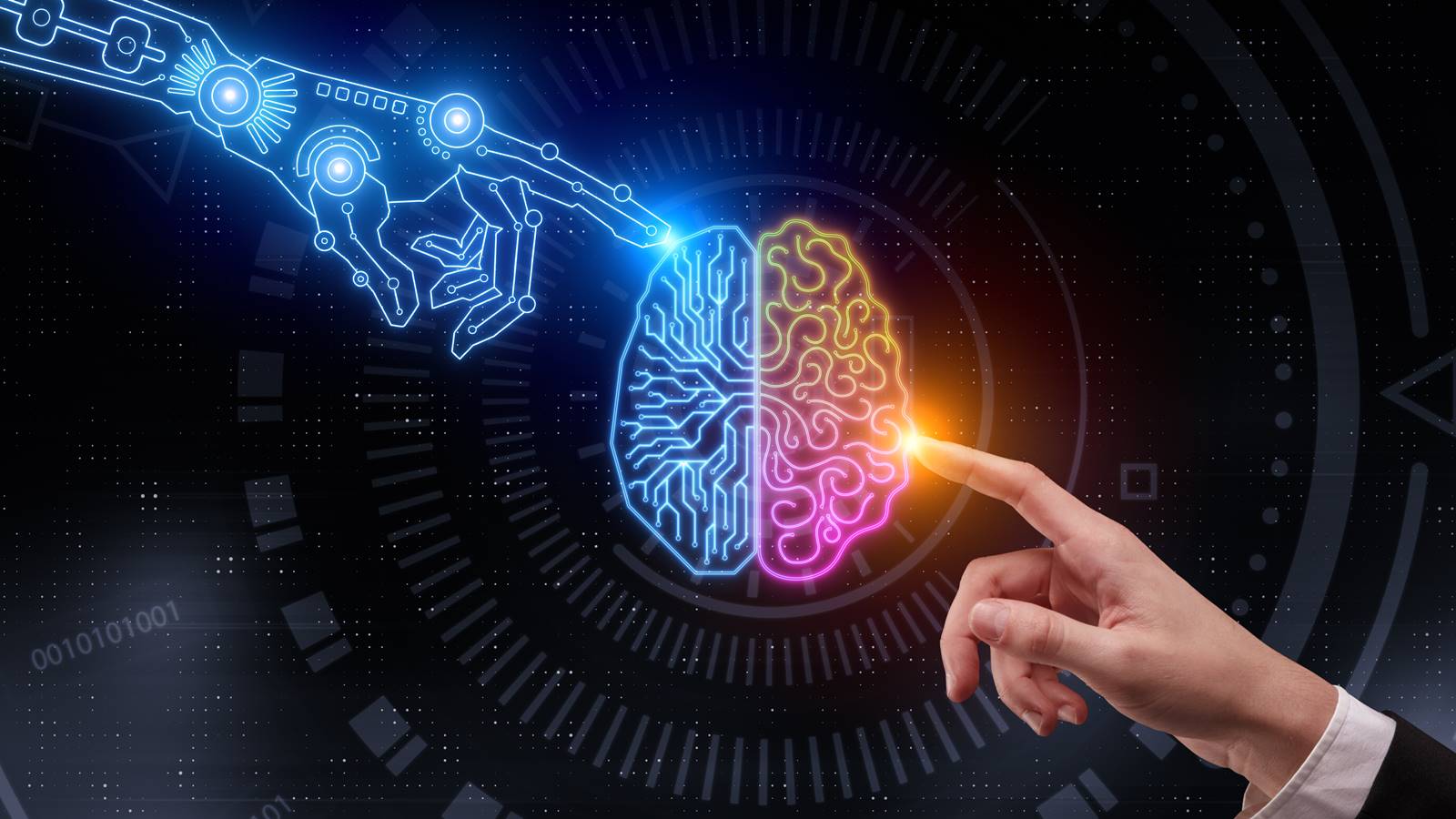
For centuries, astronomers and physicists have grappled with the sheer, overwhelming complexity of the universe. From the subatomic interactions governing quantum mechanics to the gravitational dance of billions of galaxies, the scale of data generated by modern observatories and particle accelerators has exploded far beyond the capacity of human analysis. This confluence of cosmic complexity and astronomical data volume has created a new challenge—one that only Artificial Intelligence is equipped to solve.
AI is no longer a peripheral tool in the physical sciences; it is the core engine of discovery. By accelerating data processing, automating anomaly detection, and revolutionizing predictive modeling, AI systems are granting us unprecedented clarity into the universe’s most profound secrets, effectively acting as a digital mind capable of navigating the cosmos’s infinite complexities.
Pillar 1: AI as the Cosmic Filter—Data Processing and Anomaly Detection
Modern astronomical instruments, such as the Square Kilometre Array (SKA) and the Large Synoptic Survey Telescope (LSST), generate petabytes of raw information every night. Sifting through this deluge to find a single supernova, a faint gravitational lens, or a signature of a dark matter interaction is impossible through traditional methods. This is where AI excels as the ultimate cosmic filter.
Gravitational Wave Identification
The detection of gravitational waves is a classic example. These ripples in spacetime are subtle, fleeting signals buried in immense detector noise. Using Convolutional Neural Networks (CNNs), physicists have trained AI models to recognize the precise waveform patterns of merging black holes and neutron stars far faster and more reliably than previous algorithms. This rapid, accurate detection enables prompt follow-up observations by conventional telescopes, turning rare cosmic events into observable phenomena.
Automated Object Classification
AI is essential for the continuous task of classifying billions of celestial objects. Machine learning models analyze attributes like brightness, color, and spectral data to distinguish between distant galaxies, near-Earth asteroids, and quasars. This automatic classification process drastically reduces the time spent by human researchers on cataloging, allowing them to focus on true anomalies—the unique, unexpected events that often hint at new physical laws or undiscovered phenomena. AI, therefore, is not just confirming what we know, but rapidly pointing us toward what we don’t.
Pillar 2: Accelerated Simulation and Predictive Modeling
Traditional computational physics relies on supercomputers running brute-force numerical simulations for weeks or months to model complex systems, such as the formation of dark matter halos or the evolution of early-universe fluids. AI offers a paradigm shift: surrogate modeling.
AI-Driven Cosmological Models
Instead of running a physics simulation from scratch, AI models are trained on the outputs of thousands of previous, time-intensive simulations. These neural networks then learn the underlying physics and can generate highly accurate predictions and full simulations instantly. This acceleration allows scientists to explore parameter spaces—such as varying the amount of dark energy or the density of early matter—that were previously computationally prohibitive.
Visualization of Hypothetical Worlds
Beyond numerical analysis, generative AI is transforming how scientists visualize and communicate complex theories. Models originally designed for generating hyper-realistic video are being adapted to create dynamic, detailed representations of simulated cosmic events, from turbulent accretion discs around black holes to the expanding shockwaves of supernovae. For content creators focused on emerging generative AI tools, understanding these capabilities is crucial; you can learn more about the impending arrival of cutting-edge models and the Sora 2 Release Date here. These visualization tools are not just for display; they provide new intuition and clarity for researchers facing complex, multi-dimensional data sets. The shift toward making these powerful tools more accessible is already underway. To stay updated on the latest developments in platform availability, specifically the Sora 2 Android update, check the latest reports.
Pillar 3: Optimizing Experiments and Scientific Autonomy
AI’s role extends directly into the lab and the observatory, automating high-stakes decision-making and optimizing experimental design.
Autonomous Telescope Steering
AI systems are increasingly used to autonomously manage resources at large facilities. For example, if a supernova is detected in one part of the sky, AI can instantly calculate the optimal observation strategy across a network of global telescopes, prioritizing which instruments should be used and for how long, without human intervention. This shift creates “robo-scientists” that are dramatically more efficient at capturing transient celestial events.
Particle Physics Optimization
In high-energy physics, AI is used to optimize the design and operation of particle accelerators. Machine learning algorithms analyze torrents of detector data to distinguish between known Standard Model events and potential new physics—the incredibly rare signatures that signify discovery. Furthermore, AI helps optimize the energy and collision angles in the accelerator itself, maximizing the probability of generating the desired particle interactions.
Conclusion
AI is the essential ingredient for humanity to continue unlocking the mysteries of the universe. By processing the insurmountable deluge of data and providing instantaneous, intelligent simulations, it elevates scientists from tireless data miners to visionary explorers. The future of astronomy and physics lies in this profound partnership, where the power of the human mind, driven by curiosity, is amplified by the limitless capacity of machine intelligence. This synergy is not just accelerating discovery; it is fundamentally altering the pace at which we rewrite the physical laws of reality.