
The Investment Case for Patek Philippe: What Decades of Resale Data Tell Us
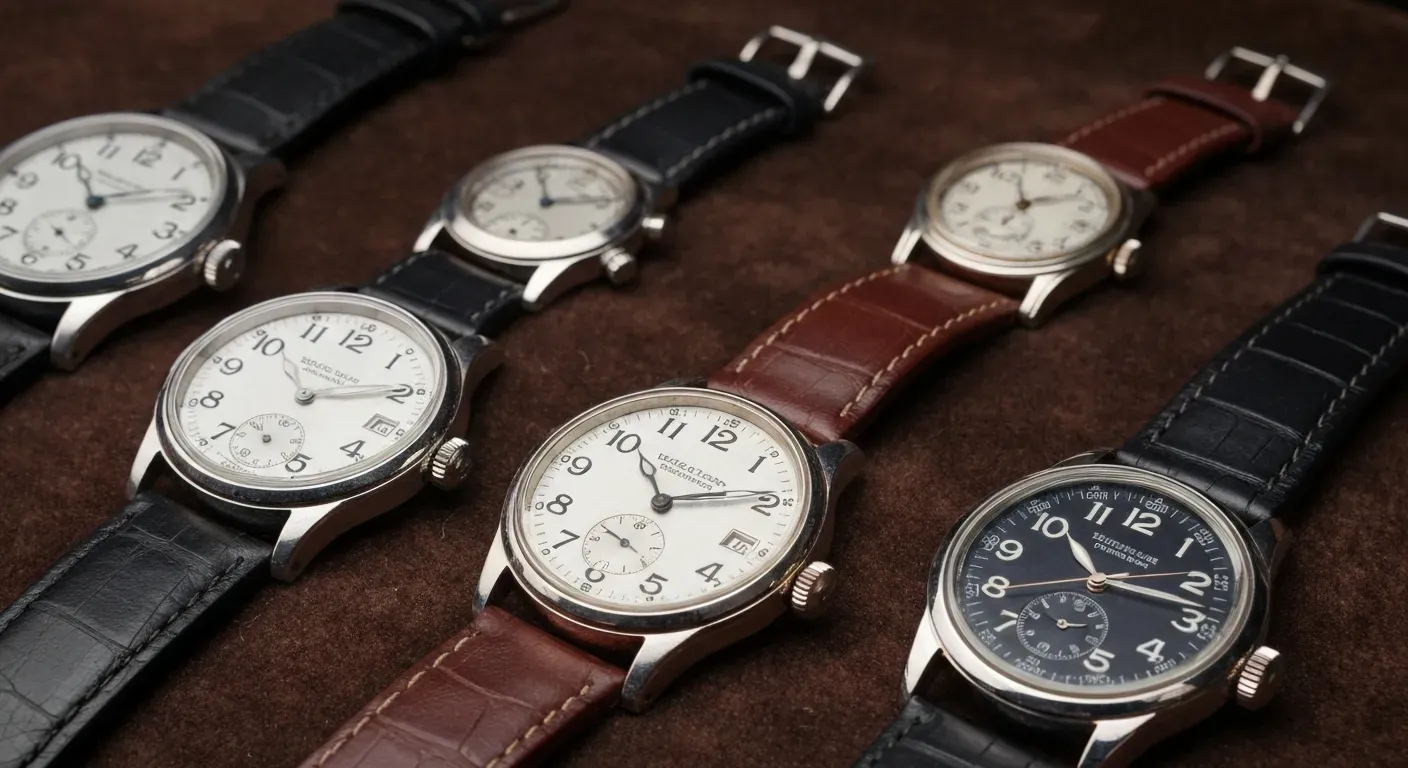
A stainless steel Patek Philippe Nautilus ref. 5711/1A sold at Phillips Geneva in 2021 for over CHF 6 million. Retail price at time of discontinuation: roughly CHF 30,000. That is not a typo. That is what happens when scarcity, brand mythology, and collector obsession collide at auction.
Not every Patek appreciates like that. Most won’t. But the data built up across decades of secondary market activity does paint a remarkably consistent picture: Patek Philippe holds value better than almost anything else in the watch world, and the right references don’t just hold value, they build it aggressively over time.
So what actually drives that? And how do you read the data without getting swept up in hype?
Why Patek Philippe Sits in a Category of Its Own
There are roughly a dozen Swiss watch manufacturers that collectors treat as serious long-term value propositions. Patek consistently sits at the top of that list, and it has for a long time.
Part of that comes down to production discipline. Patek manufactures a relatively small number of watches each year, reportedly fewer than 70,000 across its entire range. For context, Rolex produces closer to a million annually. That deliberate constraint means demand routinely outpaces supply, which is the foundational condition for secondary market premiums.
The brand also controls its own movements entirely. Every calibre is designed and produced in-house in Geneva, held to PATEK PHILIPPE SEAL standards that exceed traditional Swiss chronometric certifications. That level of vertical integration translates into watches that are genuinely difficult and expensive to produce, and that collectors recognise as technically irreplaceable.
Then there is the heritage layer. Founded in 1839, Patek has records of nearly every watch it has ever made. Some complicated pieces can be traced back to their original purchasers. That kind of documentation gives serious collectors confidence in provenance, which directly affects resale value.
What the Resale Numbers Actually Show
The Patek Philippe investment case gets its strongest support from long-term auction data.
The Patek Nautilus ref. 5711 is the obvious headline, but it is not an outlier in terms of direction, only magnitude. Across the brand’s key sport and complicated references, secondary market premiums over retail have been a consistent feature of the past two decades. Research from the watch investment tracking platform WatchCharts and broader analysis published in outlets like Bloomberg have repeatedly pointed to Patek as one of the top-performing asset categories within the watch market.
A few patterns stand out clearly from the data:
- Stainless steel sports references consistently outperform precious metal versions in percentage terms, largely because retail allocation is tighter and demand is broader.
- Limited editions and discontinued references see sharp price appreciation shortly after production ends, then tend to stabilise at a premium that holds over years.
- Complicated watches (perpetual calendars, minute repeaters, split-seconds chronographs) hold strong value among serious collectors, though their market is narrower and slower-moving.
- Entry-level dress watches from the Calatrava line hold value reliably but rarely appreciate dramatically. They perform more like a stable store of value than a growth asset.
The important caveat is that condition and originality matter enormously. A Patek with original dial, correct hands, unpolished case, and full set of box and papers will command a meaningful premium over an identical reference that has been polished or has a replaced component. Secondary market buyers at this level are forensic about details.
Which References Have the Strongest Track Record
If you are thinking seriously about Patek as an investment vehicle, the reference matters more than the brand name alone.
Nautilus (ref. 5711, 5712, 5726): The 5711 in steel is the canonical example. Discontinued in 2021, it now trades at multiples of its retail price on the secondary market. The 5712 (Nautilus with power reserve and moon phase) and 5726 (annual calendar) have followed similar trajectories. These are watches that authorised dealers could not keep in display cases even at retail, which tells you everything about the supply-demand imbalance.
Aquanaut (ref. 5167, 5968): A slightly younger sibling to the Nautilus, the Aquanaut has appreciated substantially and attracts a younger collector base. The 5968 chronograph in particular commands significant premiums.
Perpetual Calendar references (ref. 5320, 5327, 5205): These are the sweet spot for serious horological collectors. They combine genuine mechanical complexity with Patek’s long-running expertise in perpetual calendar movements. Market for these is more specialised but the floor is high and stable.
Minute Repeaters and Grand Complications: These are the stratospheric tier. References like the Sky Moon Tourbillon or the Grandmaster Chime sell at auction for sums that remove them from most buyers’ consideration, but they demonstrate the ceiling of where Patek’s reputation can take a watch’s value.
For buyers looking to explore the current secondary market inventory and buy Patek Philippe watches across these key references, working with a specialist dealer who can verify originality is essential.
The Honest Part: What Doesn’t Appreciate
A responsible look at Patek as an investment has to acknowledge the watches that do not behave like growth assets.
Most standard dress watches, particularly quartz-era pieces and entry-level mechanical models from the 1990s and 2000s, tend to hover close to retail or slightly below it. They are not bad watches by any measure, but the investment thesis does not apply with the same force.
Yellow and rose gold versions of sport references also tend to underperform their steel counterparts, sometimes significantly. The collector community has a strong preference for steel, especially for the Nautilus and Aquanaut lines, and that preference is reflected clearly in secondary market pricing.
Condition downgrades can also erode value quickly. A 5711 with a polished case might trade at 20 to 30 percent below an equivalent unpolished example. Box and papers add meaningful value, particularly for vintage pieces where documentation confirms authenticity and originality.
How to Think About This as Part of a Portfolio
Watches are not liquid assets. That is worth stating plainly. You cannot sell a Patek the way you sell a stock. Finding the right buyer, working through a dealer or auction house, and waiting for the right market moment takes time.
The most sensible framing is probably this: a well-chosen Patek purchase is likely to preserve wealth over a long horizon, and in many cases to grow it. The combination of Patek’s pricing control, production scarcity, brand prestige, and active collector base creates conditions that have historically been durable. Unlike fashion-driven collectibles, demand for key Patek references has shown remarkable consistency across different economic cycles.
It is not an alternative to diversified financial assets. But as a single luxury purchase that is more likely than most to retain or grow its value, the Patek Philippe investment case is better supported by evidence than almost anything else in the watch world.
Key Takeaways
- Patek Philippe’s production discipline (under 70,000 watches per year) creates the supply constraint that underpins secondary market premiums.
- Stainless steel sport references, particularly the Nautilus and Aquanaut, have consistently produced the strongest resale appreciation.
- Condition, originality, and completeness (box and papers) have an outsized effect on resale price and should be prioritised at purchase.
- Entry-level dress watches from Patek hold value reliably but should not be expected to appreciate significantly.
- Watches are illiquid assets. The investment case is strongest when the purchase horizon is long and the buyer is also buying something they genuinely want to own.
FAQ
Does Patek Philippe hold value better than Rolex? In many cases, yes, particularly at the higher complication tier. Rolex dominates in volume and accessibility, and its sport references (especially the Daytona and Submariner) are exceptional performers on the secondary market. But Patek’s top references, particularly complicated pieces and the Nautilus line, have produced returns that rival or exceed Rolex in percentage terms. The brands serve slightly different collector segments, and both have strong resale track records.
Is buying a Patek at retail still possible? For many references, no. Authorised dealers maintain waitlists for popular sport models that can stretch years, with no guarantee of allocation. Most collectors acquire high-demand references through the secondary market, where availability is immediate but pricing reflects the premium that the retail shortage creates.
What is the minimum budget for a Patek with genuine investment potential? The Calatrava line starts from around $10,000 to $15,000 on the secondary market, and those pieces hold value reasonably well. But for references with a genuine appreciation track record, budget typically starts around $30,000 to $50,000 and rises sharply for sport models and complications. The most collectible references trade from $100,000 upward.
Does service history affect resale value? It depends on the watch and the buyer. A recent service from Patek Philippe’s own service centres is generally viewed positively for older pieces. The concern arises when servicing involved replacing original parts. For vintage watches especially, originality of movement, dial, and case components is a primary concern for sophisticated buyers.
Are limited edition Patek watches always a better investment than standard production models? Not automatically. Limited editions tied to strong partnerships or significant anniversaries (particularly those in steel) have performed well historically. But some limited editions in precious metals or with niche dial variations attract a smaller buyer pool, which can limit liquidity. The reference matters more than the limited edition label alone.
Conclusion
The investment case for Patek Philippe is not built on speculation. It is built on decades of consistent secondary market behaviour, a brand that has managed scarcity with unusual discipline, and a collector base that treats certain references as genuine stores of value.
The risks are real: illiquidity, condition sensitivity, and the reality that most standard references will not produce dramatic returns. But for buyers willing to understand which references have earned their reputation in the resale market, and who are buying something they would be happy to own regardless of what happens to the price, Patek remains one of the most defensible luxury purchases available.
The data supports that. So does the history.