
Fingerroot vs Ginger vs Galangal: Taste, Use, and When Not to Substitute
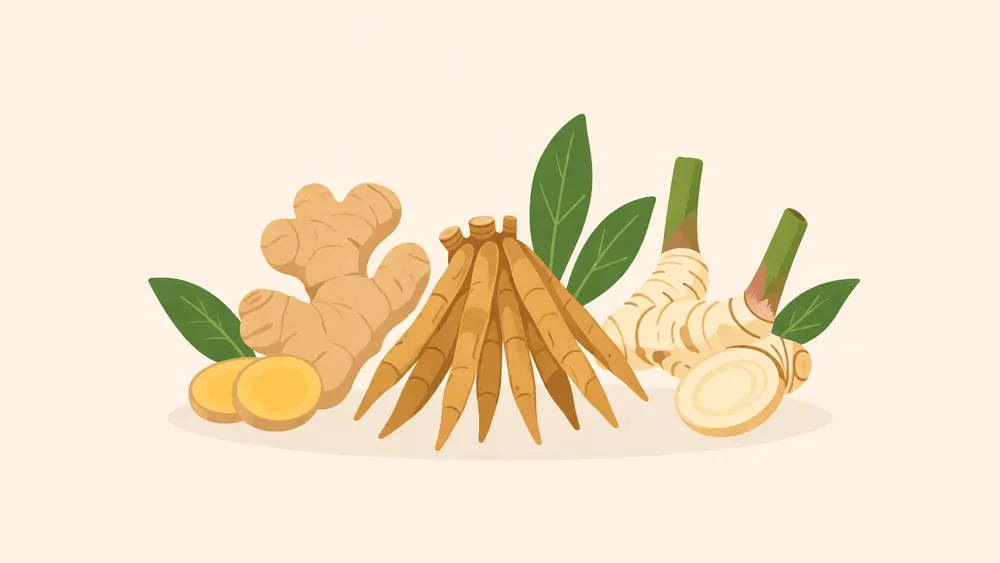
Fingerroot vs Ginger vs Galangal is not a small kitchen detail. It changes flavor, texture, and the final result of a dish. These three rhizomes belong to the same broad ginger family, so they can look related at first glance. That is exactly why people confuse them. But they are not the same ingredient, and they do not behave the same in food. If you want to know what each one tastes like, where each one works best, and when substitution is a bad idea, this guide will help you make the right call quickly.
The short version is simple. Ginger is the most familiar and flexible. Galangal is sharper, woodier, and more assertive. Fingerroot is slimmer, more aromatic, and often used in specific Southeast Asian dishes where its flavor does not act like a direct replacement for either ginger or galangal. If a recipe depends on one of them for its core identity, switching blindly can flatten or distort the dish.
Quick answer: what is the main difference between fingerroot, ginger, and galangal?
The biggest difference is flavor. Ginger brings warm, fresh heat and citrus-like brightness. Galangal is firmer, piney, peppery, and more intense. Fingerroot is lighter, more aromatic, and more delicate than galangal, yet still distinct from common ginger.
The second big difference is culinary role. Ginger fits into more recipes across more cuisines. Galangal often defines the flavor base of certain soups, curries, and pastes. Fingerroot is more niche and often appears in Thai, Indonesian, Cambodian, and related regional cooking where its specific aroma matters.
| Ingredient | Common botanical reference | Taste profile | Best known use |
|---|---|---|---|
| Fingerroot | Boesenbergia rotunda | Aromatic, earthy, lightly spicy, slightly medicinal | Specific Southeast Asian dishes, curry pastes, fish dishes |
| Ginger | Zingiber officinale | Warm, zesty, juicy, fresh heat | Global cooking, drinks, sauces, baking, stir-fries |
| Galangal | Often Alpinia galanga or related species | Piney, peppery, citrusy, woody, more rigid | Thai and Southeast Asian soups, curry pastes, broths |
What is fingerroot?
Fingerroot is a rhizome in the ginger family, usually identified as Boesenbergia rotunda. It gets its English name from its shape. The rhizome grows in long, narrow sections that look like fingers extending from a central base. In Thai cooking it is widely known as krachai.
How it tastes
Fingerroot tastes aromatic and earthy with a gentle sharpness. It can come across as slightly peppery or lightly medicinal, but not in the same way as galangal. It is usually less juicy and less lemony than fresh ginger. It also does not hit the palate with the same hard edge as galangal.
How it is used
Fingerroot is often used in dishes where the flavor needs to stay clear but not overpowering. It shows up in curry pastes, soups, fish dishes, and regional spice mixtures. In many cases it acts like a supporting aromatic rather than a dominant hot note.
What is ginger?
Ginger usually refers to Zingiber officinale. It is the most familiar rhizome of the three and the most broadly used. It appears in savory dishes, sweet dishes, teas, sauces, marinades, and baked goods across many cuisines.
How it tastes
Fresh ginger tastes bright, warm, spicy, and juicy. It has a lively bite, but it usually feels cleaner and more flexible than galangal. It also adapts well to both short cooking and long cooking.
How it is used
Ginger works in stir-fries, broths, dressings, baked desserts, cookies, drinks, and infused sauces. This range is one reason people overestimate its ability to replace other rhizomes. It is versatile, but not universal.
What is galangal?
Galangal is another rhizome in the ginger family. The word can refer to more than one species in trade and cooking, but in culinary comparison it often points to greater galangal or related galangal types used in Southeast Asian food.
How it tastes
Galangal tastes stronger, drier, woodier, and more resinous than ginger. Many cooks describe it as piney, peppery, or citrusy in a sharper, more structural way. It is not a soft or mellow ingredient. It pushes its way into the profile of a dish.
How it is used
Galangal often anchors soups, curry pastes, and aromatic broths. It is especially important in dishes where the broth itself carries the identity of the recipe. In those cases, replacing galangal with ginger changes more than one flavor note. It changes the character of the dish.
How do they look different?
Appearance helps, especially when you are buying fresh rhizomes.
Fingerroot appearance
Fingerroot usually looks long, thin, and clustered. It resembles a bundle of narrow fingers.
Ginger appearance
Ginger usually looks knobby, branched, and thicker. The surface can be pale beige with irregular bulges.
Galangal appearance
Galangal tends to look firmer, smoother, and more solid than ginger. Sliced galangal often appears denser and less juicy.
This matters because shape can warn you before you buy the wrong ingredient. If a seller calls something fingerroot but the photo shows a thick knobby rhizome, pause and verify the listing.
Which one is easiest to cook with?
Ginger is the easiest for most home cooks. It is widely available, easy to grate or mince, and familiar in both taste and handling. Fingerroot is easier to use than it looks, but it is less common outside specialty markets. Galangal can be more challenging because it is fibrous, firmer, and less forgiving in substitution.
Best choice for everyday cooking
Choose ginger when the recipe allows flexibility or when you need a broad-purpose aromatic. It has the widest margin for success.
Best choice for dish authenticity
Choose fingerroot or galangal when the recipe specifically asks for them. Those dishes often rely on a recognizable regional profile that ginger cannot fully copy.
When can you substitute one for another?
You can substitute only when the rhizome is not the defining flavor of the dish. Even then, it is a compromise, not a perfect swap.
| If the recipe calls for | Possible substitute | How safe is the swap? | What changes |
|---|---|---|---|
| Ginger | Fingerroot | Low to medium | Less brightness, more niche aromatic tone |
| Ginger | Galangal | Low | Dish becomes woodier and sharper |
| Fingerroot | Ginger | Medium in non-core roles | Cleaner heat, less regional specificity |
| Fingerroot | Galangal | Low | More aggressive aroma, less delicate balance |
| Galangal | Ginger | Low | Broth loses piney, peppery depth |
| Galangal | Fingerroot | Low to medium | Softer, less woody result |
When should you not substitute?
Do not substitute when the rhizome is part of the recipe’s identity. That usually happens in regional dishes, curry pastes, aromatic broths, and recipes with only a few key ingredients. In those situations, the difference becomes obvious.
Do not swap in signature soups and curry bases
If the recipe uses galangal to build a broth, ginger rarely gives the same result. The dish may still be edible, but it will not taste like the intended version.
Do not swap in fish-forward dishes built around fingerroot
Fingerroot can bring a very specific aromatic lift in certain fish dishes and curry pastes. Ginger may push the flavor in a warmer and more generic direction.
Do not swap in recipes with very short ingredient lists
The fewer ingredients a recipe has, the more each aromatic matters. A wrong rhizome becomes easier to notice.
How should beginners decide what to buy?
Buy based on the dish, not on the fact that all three belong to the same plant family.
Buy ginger when
- You cook across many cuisines.
- You want one rhizome for sauces, teas, stir-fries, and baking.
- You need the most flexible option.
Buy fingerroot when
- You are making a recipe that names fingerroot or krachai.
- You want a more specific Southeast Asian aromatic profile.
- You found a trusted source with clear botanical naming.
Buy galangal when
- You are making Thai-style soups, curry pastes, or broths that depend on galangal.
- You want a firmer, sharper, more resinous flavor.
- You are following a recipe where substitution is likely to flatten the dish.
Checklist: how to avoid the wrong substitution
- Read the recipe twice before buying anything.
- Check whether the rhizome is a core flavor or a background note.
- Use the exact ingredient for broth-heavy Southeast Asian dishes when possible.
- Choose ginger only when the recipe can tolerate flexibility.
- Do not assume fingerroot and galangal are interchangeable.
- Verify the botanical name if the listing looks vague.
- Match the photo to the rhizome shape before ordering online.
- When in doubt, freeze the correct ingredient instead of improvising every time.
FAQ about Fingerroot vs Ginger vs Galangal
Is fingerroot the same as ginger?
No. Fingerroot and ginger are different rhizomes in the same plant family.
Is galangal stronger than ginger?
Usually yes. Galangal often tastes woodier, sharper, and more assertive than ginger.
Can I replace galangal with ginger?
You can in an emergency, but the flavor will change clearly in soups, broths, and curry pastes.
Can I replace fingerroot with ginger?
Sometimes, but only when fingerroot is not the main identity of the dish.
What does fingerroot taste like?
It tastes aromatic, earthy, lightly spicy, and more delicate than galangal.
Which one is best for beginners?
Ginger is usually the easiest and most flexible choice for everyday cooking.
Why do people confuse these three ingredients?
They belong to the same family, look somewhat related, and often appear in similar regional cuisines.
Glossary
Fingerroot
A finger-shaped rhizome commonly identified as Boesenbergia rotunda and used in Southeast Asian cooking.
Ginger
The widely used rhizome of Zingiber officinale, known for warm, zesty heat.
Galangal
A rhizome in the ginger family with a firmer, piney, peppery flavor profile.
Rhizome
An underground plant stem that stores energy and produces new growth.
Krachai
A Thai name commonly used for fingerroot.
Aromatic
A flavor or scent quality that adds fragrance and complexity to food.
Substitution
Using one ingredient in place of another when the original is unavailable.
Zingiberaceae
The ginger family of plants, which includes ginger, galangal, turmeric, and fingerroot.
Conclusion
Fingerroot, ginger, and galangal may look related, but they do different jobs in the kitchen. Use the exact rhizome when the recipe depends on it, and treat substitution as a backup, not a default strategy.
Sources
Accepted species reference and plant identity for fingerroot, Plants of the World Online — powo.science.kew.org
Plant profile and culinary overview for galangal, Missouri Botanical Garden Plant Finder — missouribotanicalgarden.org/PlantFinder
Thai ingredient reference for fingerroot and krachai use in cooking, Thai Cookbook TV — thaicookbook.tv/thai-food-ingredients/roots-and-rhizomes/finger-root-thai-krachai
Culinary produce overview for fingerroot use and handling, Specialty Produce — specialtyproduce.com/produce/Fingerroot_Ginger_11704.php
General taxonomic reference for fingerroot naming and distribution, World Flora and related botanical references — worldfloraonline.org