
Understanding off-grid Solar Inverters: The Heart of Your Independent Power System
Introduction
This blog is designed to give homeowners, remote property owners, van lifers, and anyone pursuing genuine energy independence a clear and practical understanding of off-grid solar inverters. Whether you are just beginning to research a solar installation or you are trying to make sense of an existing system that is underperforming, the core question is almost always the same: where does the power actually come from, and how does it reach the devices in your home? The answer runs through the inverter. In the pages that follow, we will explain what an inverter does, why the type you choose has lasting consequences for your system, what real-world performance looks like across different product categories, and how to size and select a unit that matches your energy habits. Our goal is not to sell you a product. It is to give you the knowledge that makes you a smarter buyer, a more capable system owner, and a more confident decision-maker when the time comes to design or upgrade your power setup.
What Is an off-grid Solar Inverter?
At its most fundamental level, an inverter is a power conversion device. Solar panels produce direct current, commonly written as DC, because electrons flow in a single, consistent direction through the circuit. The appliances in your home, from your refrigerator and washing machine to your phone charger and television, all operate on alternating current, or AC, where the direction of electron flow reverses at a fixed frequency.
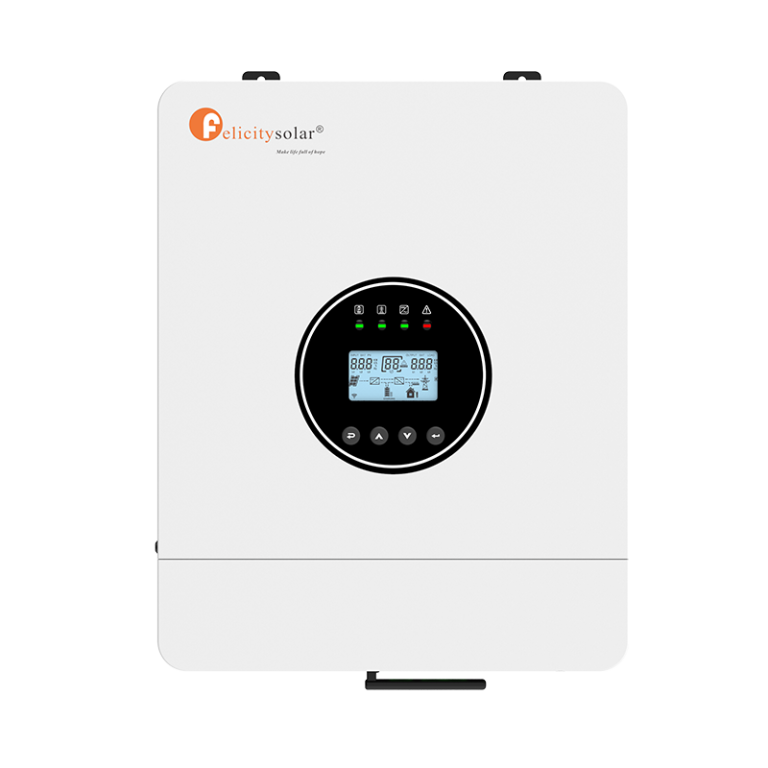
An off-grid inverter bridges that gap. It takes the DC power stored in your battery bank, converts it into household-grade AC electricity, and delivers it to your loads without any reliance on the utility grid. This is fundamentally different from a grid-tied inverter, which feeds power back to the utility company and shuts down during a grid outage for safety reasons. An off-grid inverter operates entirely on its own, which is precisely the point.
According to the U.S. Department of Energy, inverters are considered one of the most critical components in any solar energy system, and selecting the right type directly affects overall system performance and longevity.
Types of off-grid Inverters
Not all inverters work the same way, and choosing the wrong type for your application can result in damaged appliances, shortened battery life, or a system that simply fails to power everything you need. The table below breaks down the main categories you will encounter in the off-grid market.
| Inverter Type | Waveform Output | Best Use Case | Efficiency |
| Modified Sine Wave | Stepped approximation of AC | Basic tools, simple lighting | 85% to 90% |
| Pure Sine Wave | Clean, utility-grade AC | Sensitive electronics, motors | 90% to 95% |
| Inverter-Charger | Pure sine wave with integrated charging | Full household systems | 92% to 97% |
| Low Frequency Inverter | Pure sine wave, transformer-based | Heavy surge loads, workshops | 88% to 94% |
| High Frequency Inverter | Pure sine wave, lighter design | Residential, van and cabin builds | 90% to 96% |
The Inverter-Charger: Why Most Serious off-grid Builds Use One
If you are building a complete off-grid system rather than a minimal backup setup, the inverter-charger is almost certainly the right choice. These units combine a pure sine wave inverter with a multi-stage battery charger and an automatic transfer switch that can accept power from a generator or shore power source when the solar array falls short.
When evaluating inverter-chargers, here are the key advantages that make them the preferred choice for full-time off-grid living:
- They integrate battery charging and power inversion into a single unit, reducing wiring complexity and potential failure points.
- They communicate directly with solar charge controllers and battery management systems for intelligent, automated energy handling.
- They can automatically switch to a generator when solar production drops, then return to solar-only mode once batteries recover.
- They offer remote monitoring through apps and displays, giving you full visibility into your system at all times.
Brands like Victron Energy, Schneider Electric, and Outback Power have built strong reputations in this category. According to NREL research on distributed solar systems, integrated inverter-charger setups consistently outperform standalone inverter configurations in long-term reliability and energy efficiency.
Sizing Your Inverter: The Most Common Mistake
Oversizing and undersizing are both costly errors, but they fail in different ways. An inverter that is too small will trip on surge loads, overheat during sustained high-draw events, or simply fail to start motor-driven appliances like well pumps, air conditioners, and refrigerators that pull two to three times their rated wattage at startup.
An inverter that is too large creates a different problem. Inverters consume a small amount of power simply by being on, a figure called idle draw or standby consumption. A 6,000-watt inverter running a 200-watt load all night is burning energy inefficiently. In a system where every watt-hour matters, that idle draw adds up quickly across weeks and months.
The practical approach to correct sizing involves a few straightforward steps:
- Add up the wattage of every appliance you might run at the same time during peak usage hours.
- Apply a 20 to 25 percent safety margin on top of that total to account for inefficiencies and future load growth.
- Check the surge rating of your largest motor-driven appliance; your inverter’s peak surge capacity must exceed that figure.
- Round up to the next standard unit size rather than trying to match your number exactly.
Efficiency and Real-World Impact
Manufacturer efficiency ratings are measured at optimal load conditions, usually around 50 to 75 percent of rated capacity. Real-world performance at partial loads can be considerably lower, and this matters enormously in off-grid systems where light loads are the norm for much of the day and night.
A high-quality inverter-charger has an idle draw below 15 watts and can enter a search mode that drops consumption even further when no load is detected. Over the course of a year, the difference between a well-designed inverter and a budget unit can represent hundreds of watt-hours of wasted energy every single day, which translates directly into larger battery banks, more solar panels, or both. The International Renewable Energy Agency notes that system efficiency improvements at the inverter level are among the most cost-effective upgrades available to small-scale off-grid operators.
Installation, Safety, and Maintenance
Inverters handle high currents and, depending on system voltage, potentially dangerous DC voltages. Fusing, disconnect switches, and proper wire sizing are not optional considerations. The National Electrical Code provides the baseline standard in the United States, but off-grid systems often benefit from consulting a certified solar installer or electrician with specific experience in standalone power systems.
Maintenance on a modern inverter is minimal, but consistent attention goes a long way. Keeping ventilation clearances free of dust and debris, checking terminal torques annually, and monitoring system logs for fault codes are the primary tasks. Firmware updates from manufacturers occasionally improve performance or add compatibility with newer battery chemistries, and these are worth applying when the system is not under load. For detailed wiring standards and safety guidelines, the Solar Energy Industries Association maintains a comprehensive set of industry best practices for both DIY builders and professional installers.